Schlieren Photography / Currents
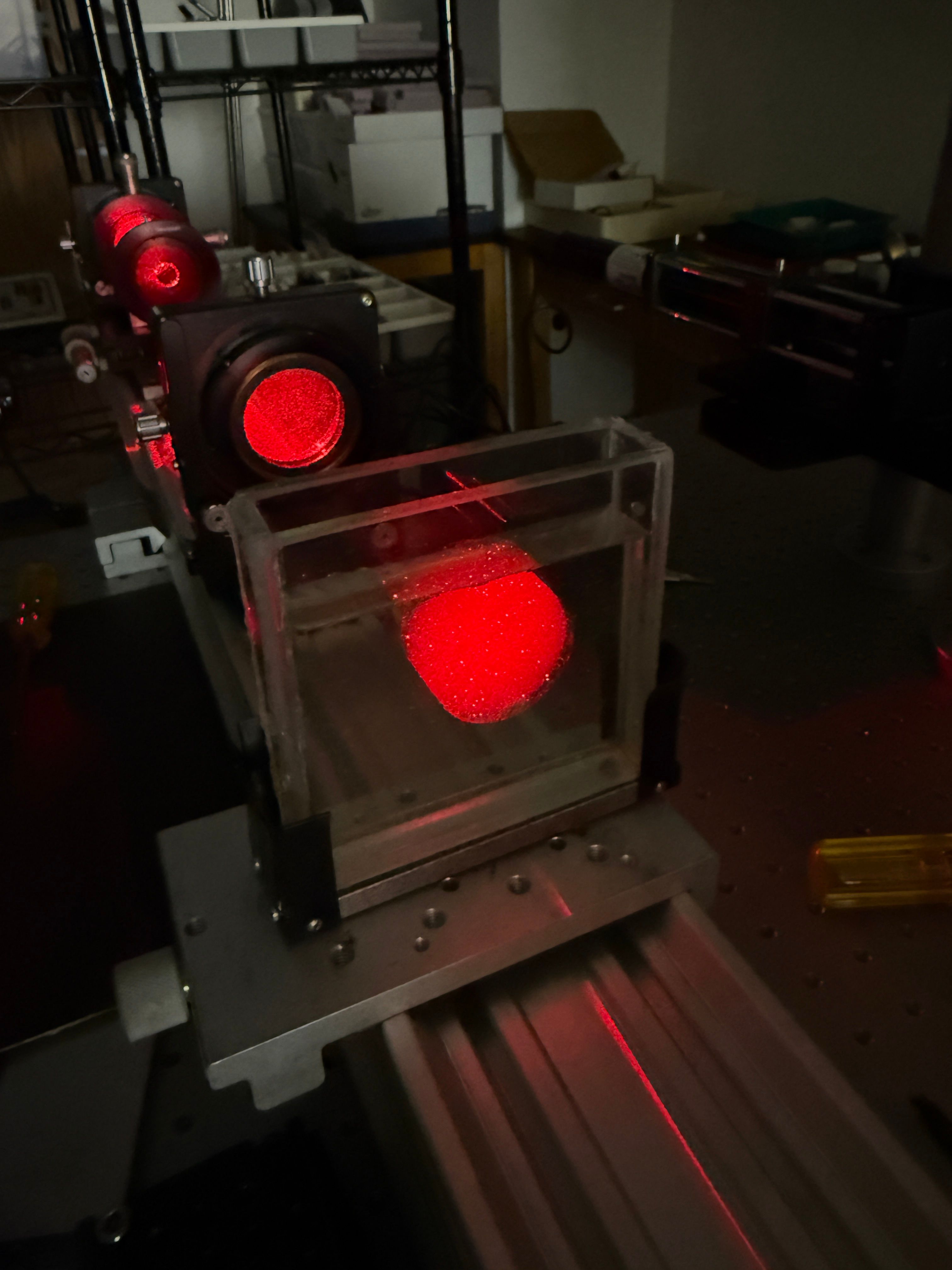
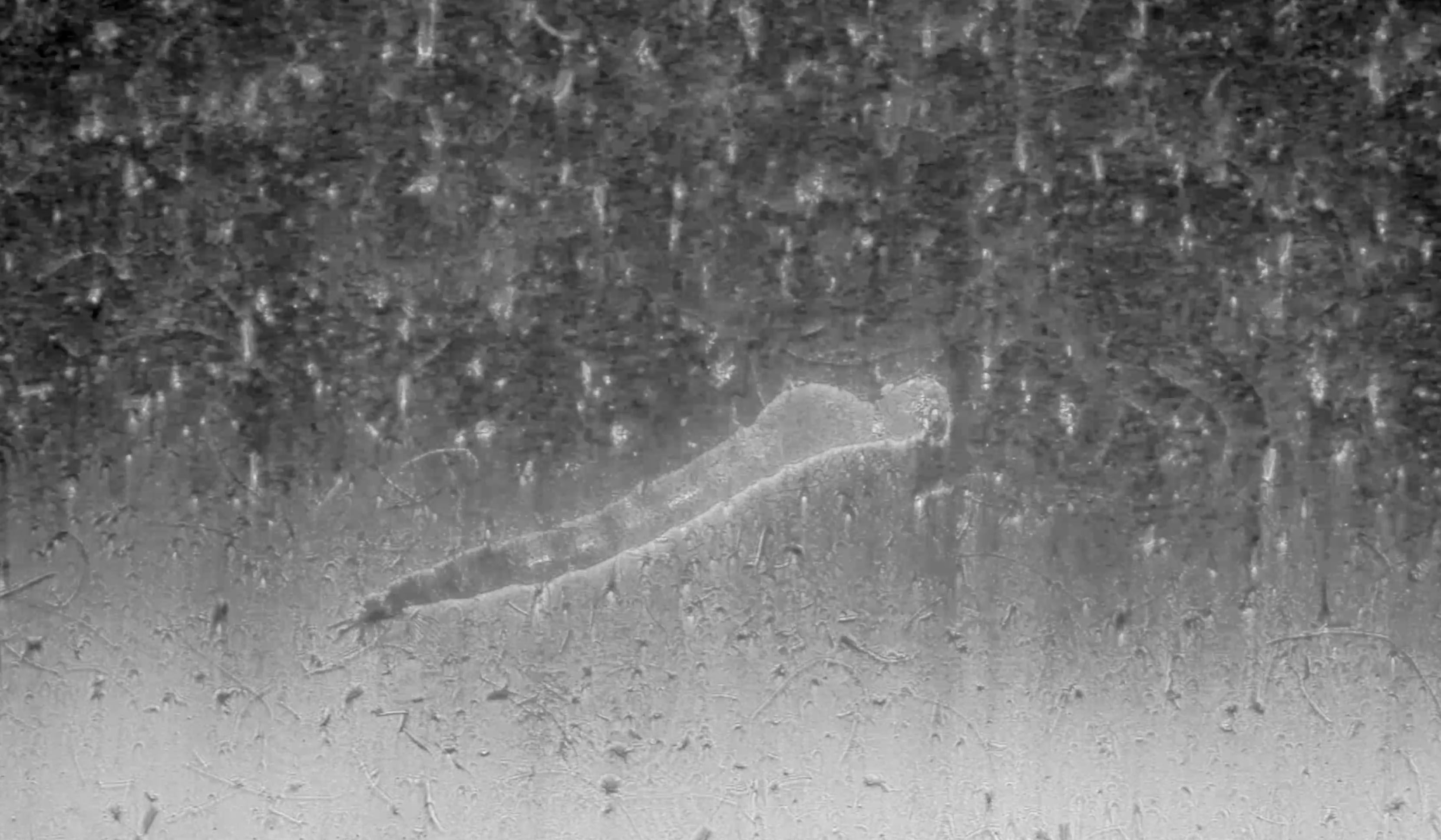
This schlieren video was created in collaboration with Rudi Strickler in his laboratory, using a large volume of water rather than compressed microscope slides to preserve the natural fluid environment surrounding the organisms. The work focuses primarily on phantom midge larvae (Chaoborus), alongside copepods, water fleas, and Stentor moving through the background. Schlieren imaging makes the movement and changing density of the surrounding water visible, including the currents generated by the swimming organisms.
Schlieren imaging reveals small changes in the refractive index of water caused by differences in density, temperature, and fluid movement. These variations bend light and become visible as shifting patterns of shadow and distortion. Within the highly viscous microscopic environment, swimming and feeding organisms generate intricate wakes and currents. Many planktonic organisms rely on these hydrodynamic signals for feeding, mating, escape behaviors, and communication, making the surrounding water an active and constantly changing part of their ecology. Future iterations of this work will focus on capturing and highlighting these organism-generated currents more clearly.
This work is part of an ongoing interest in the environments and umwelten of microscopic organisms, and in imagining what it might feel like to move, sense, and exist within the fluid world of a plankter.