Scanning Electron Microscopy
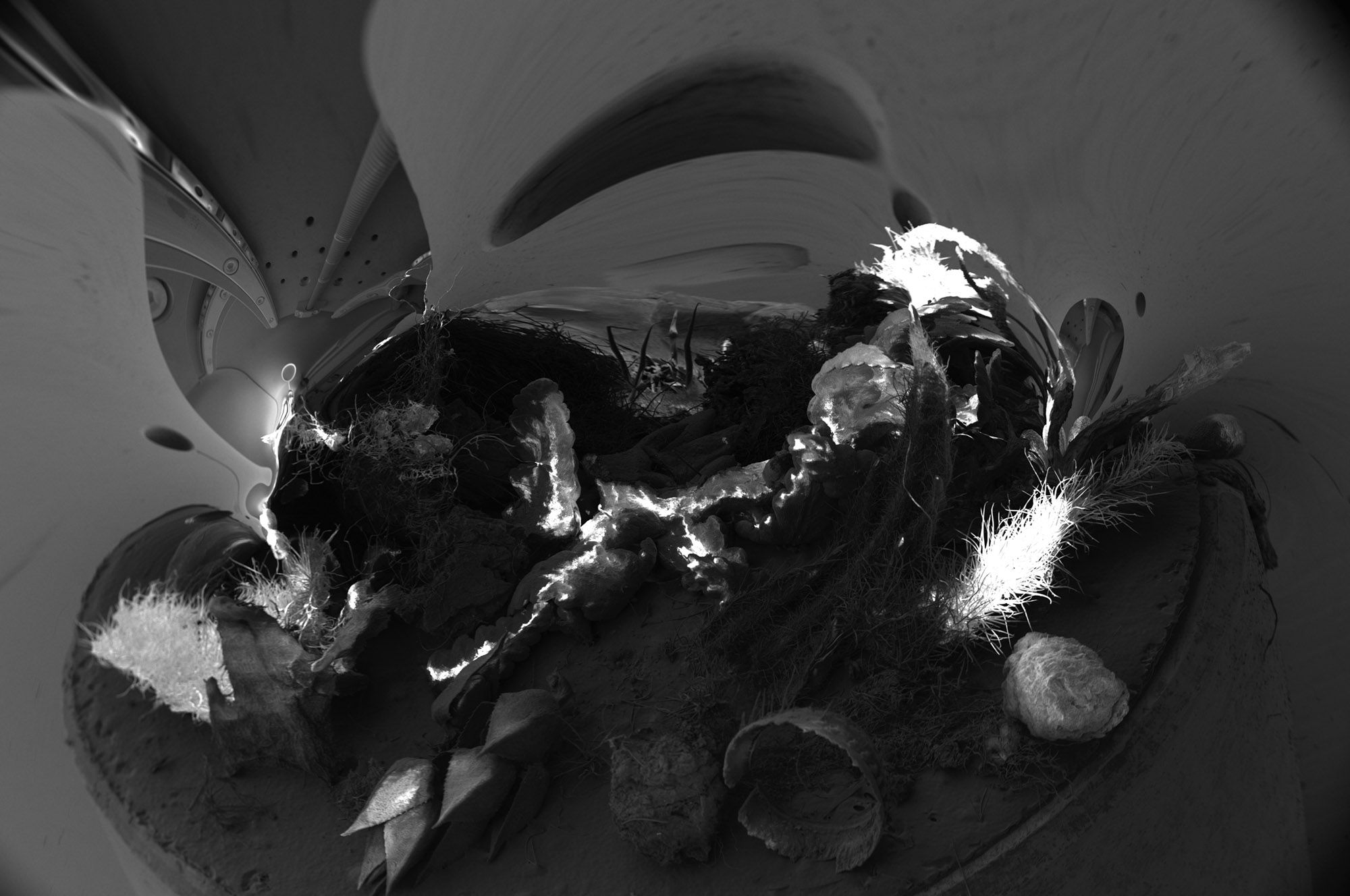
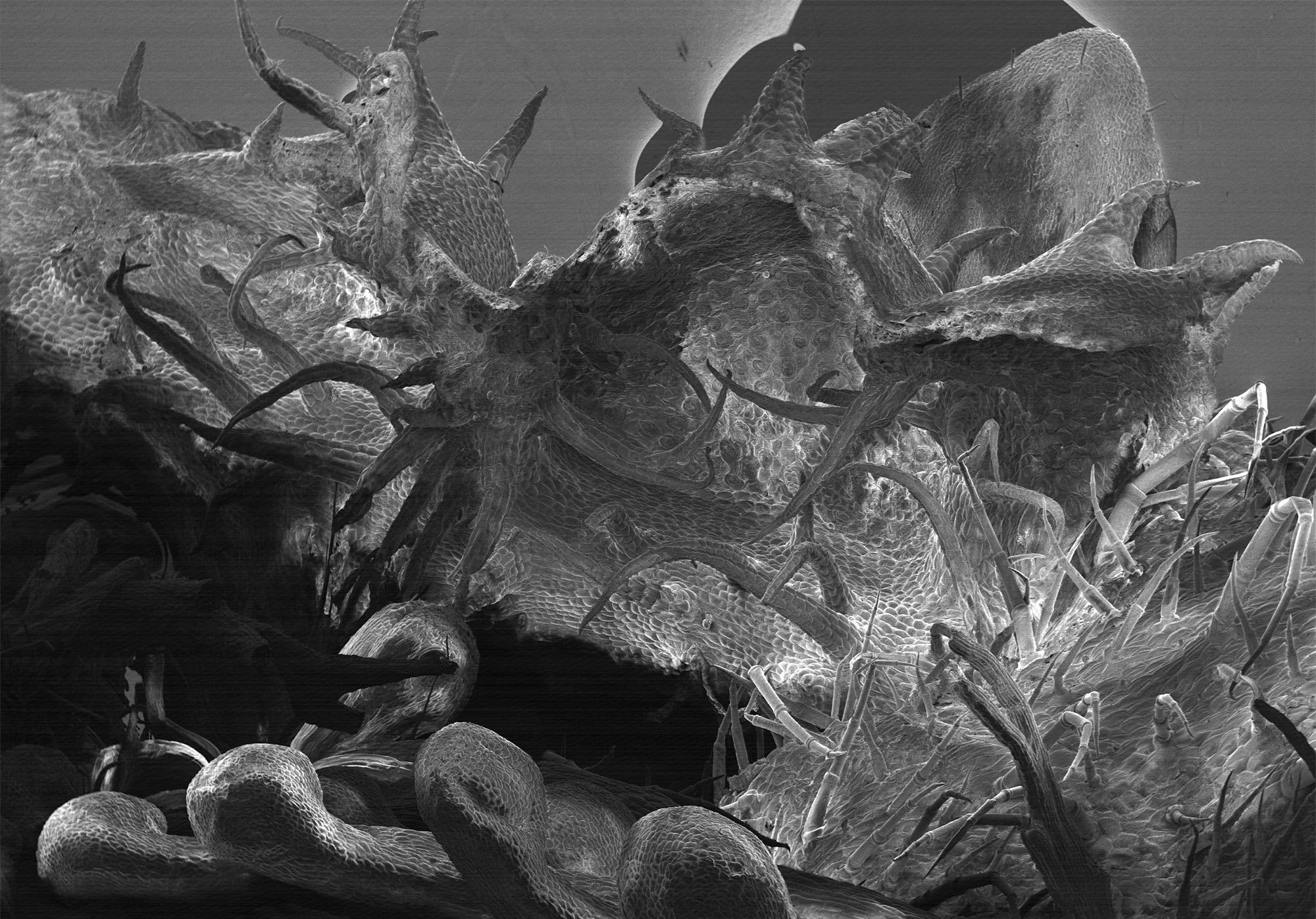
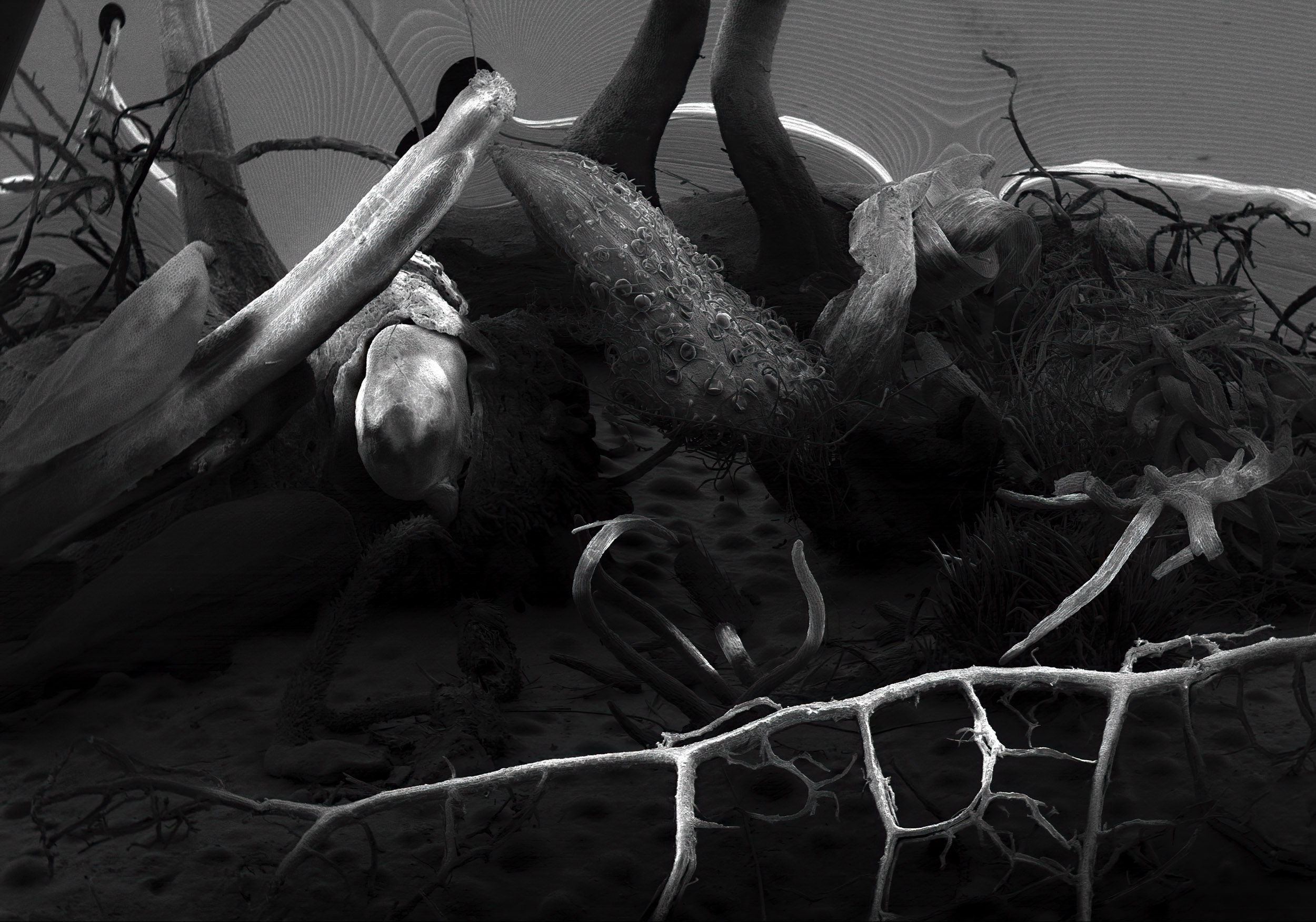
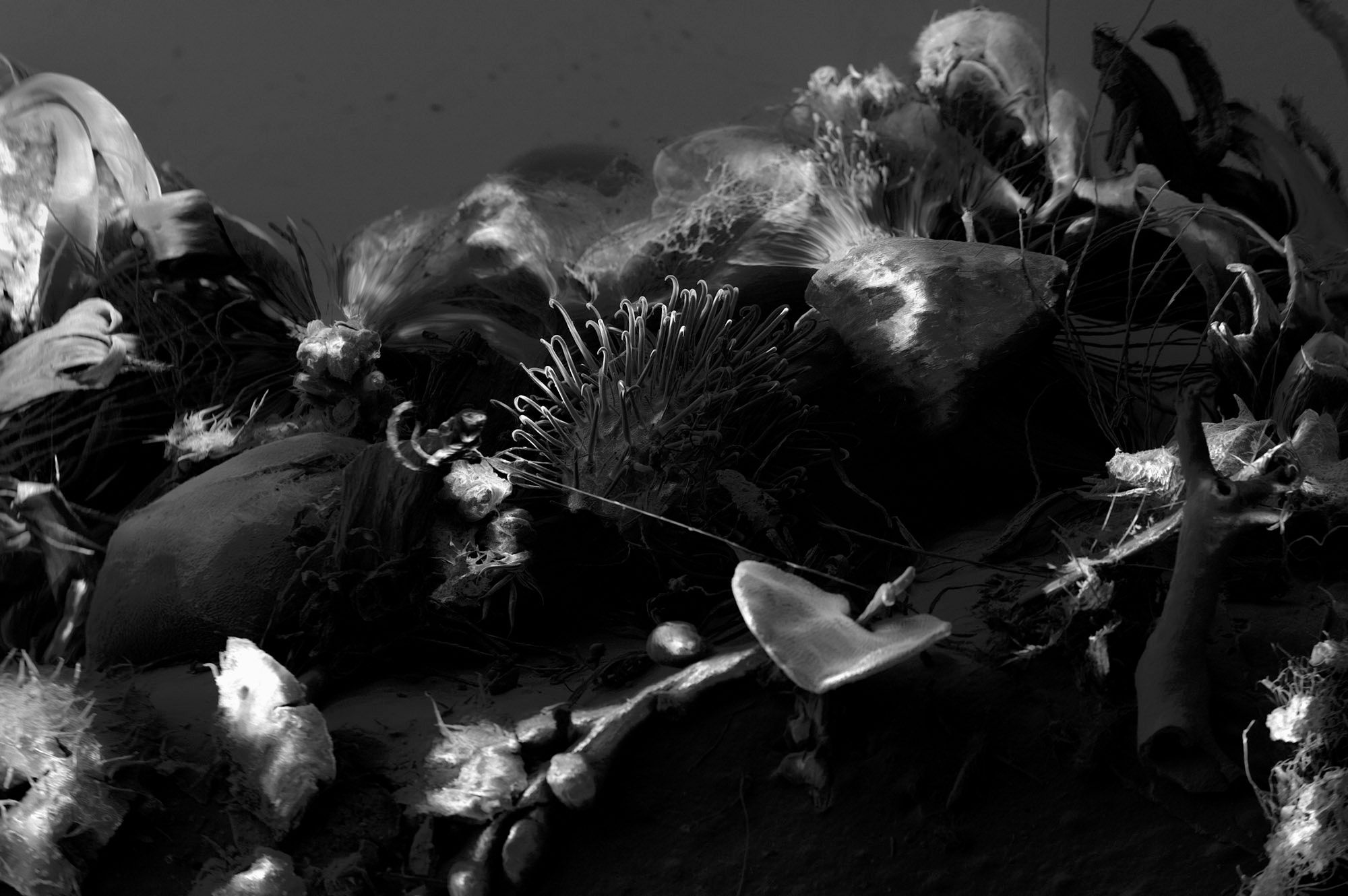
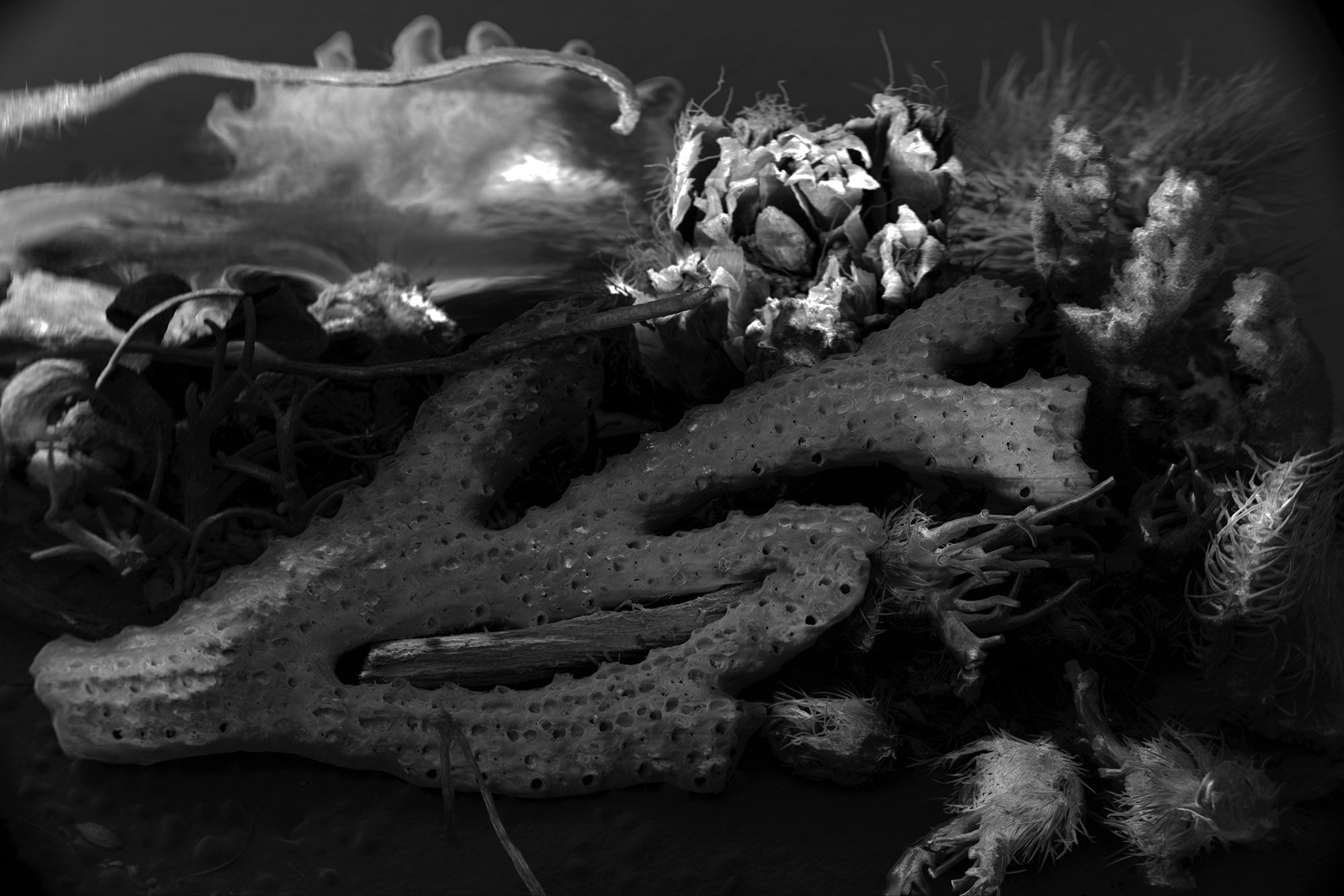
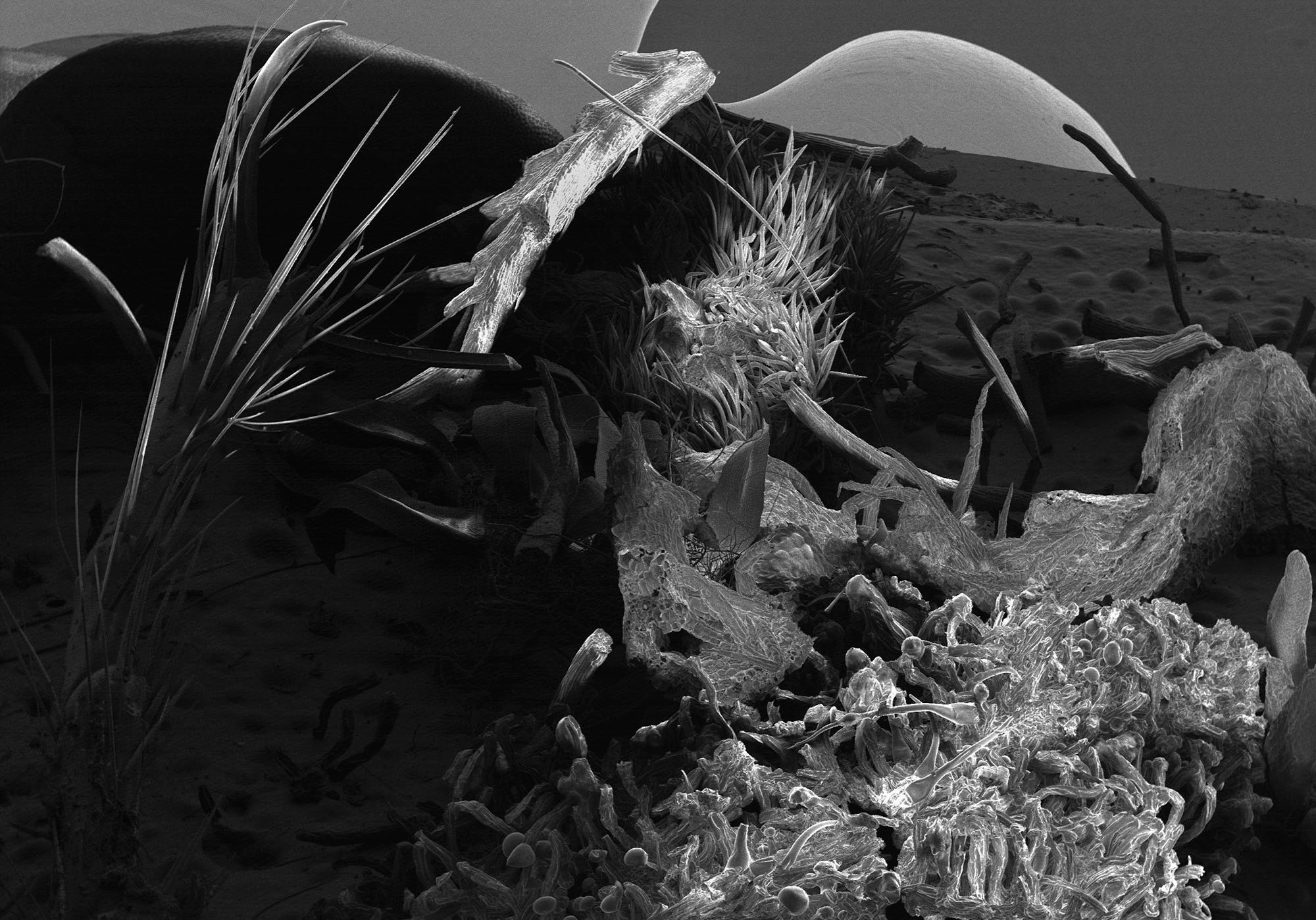
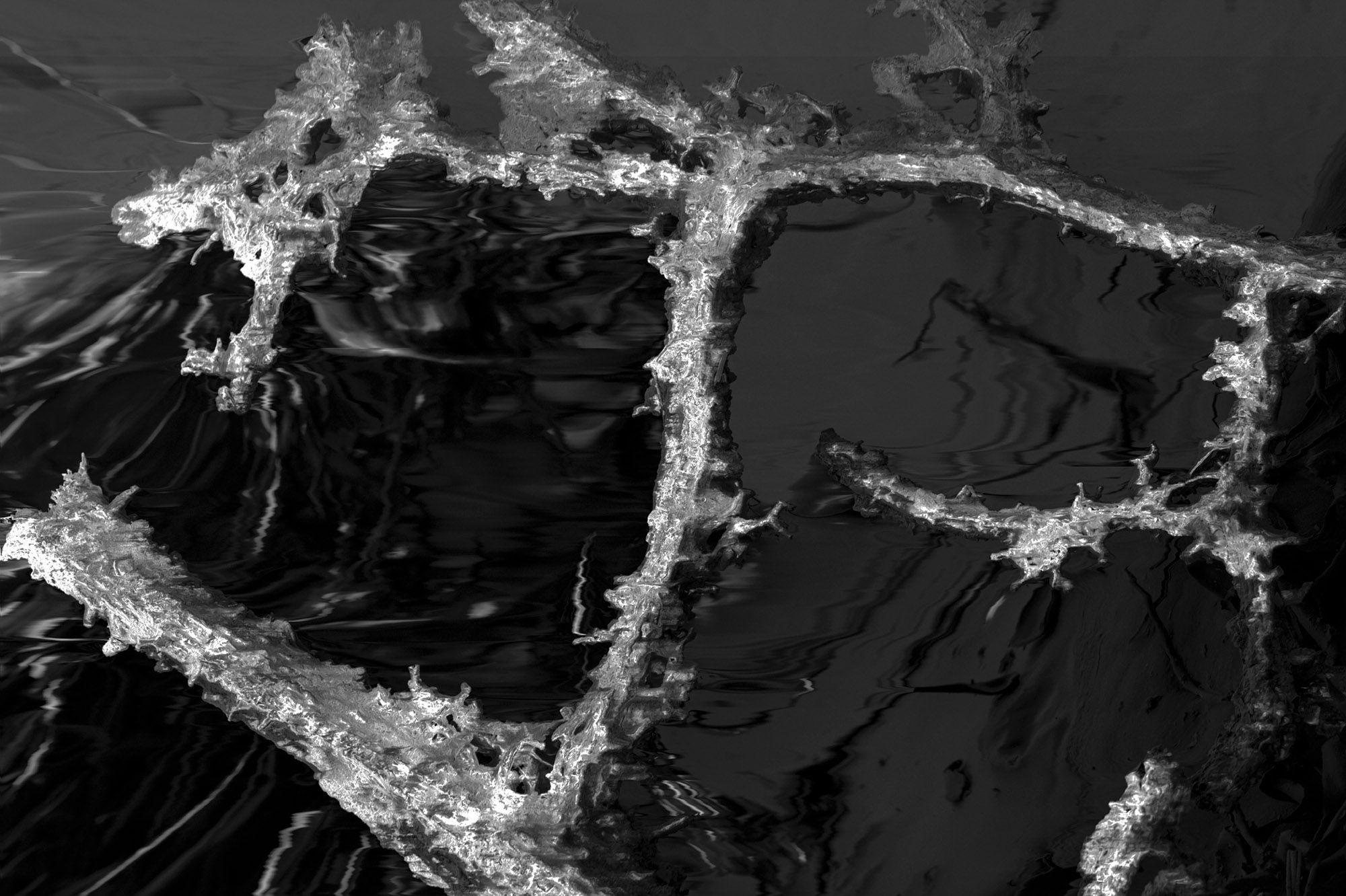
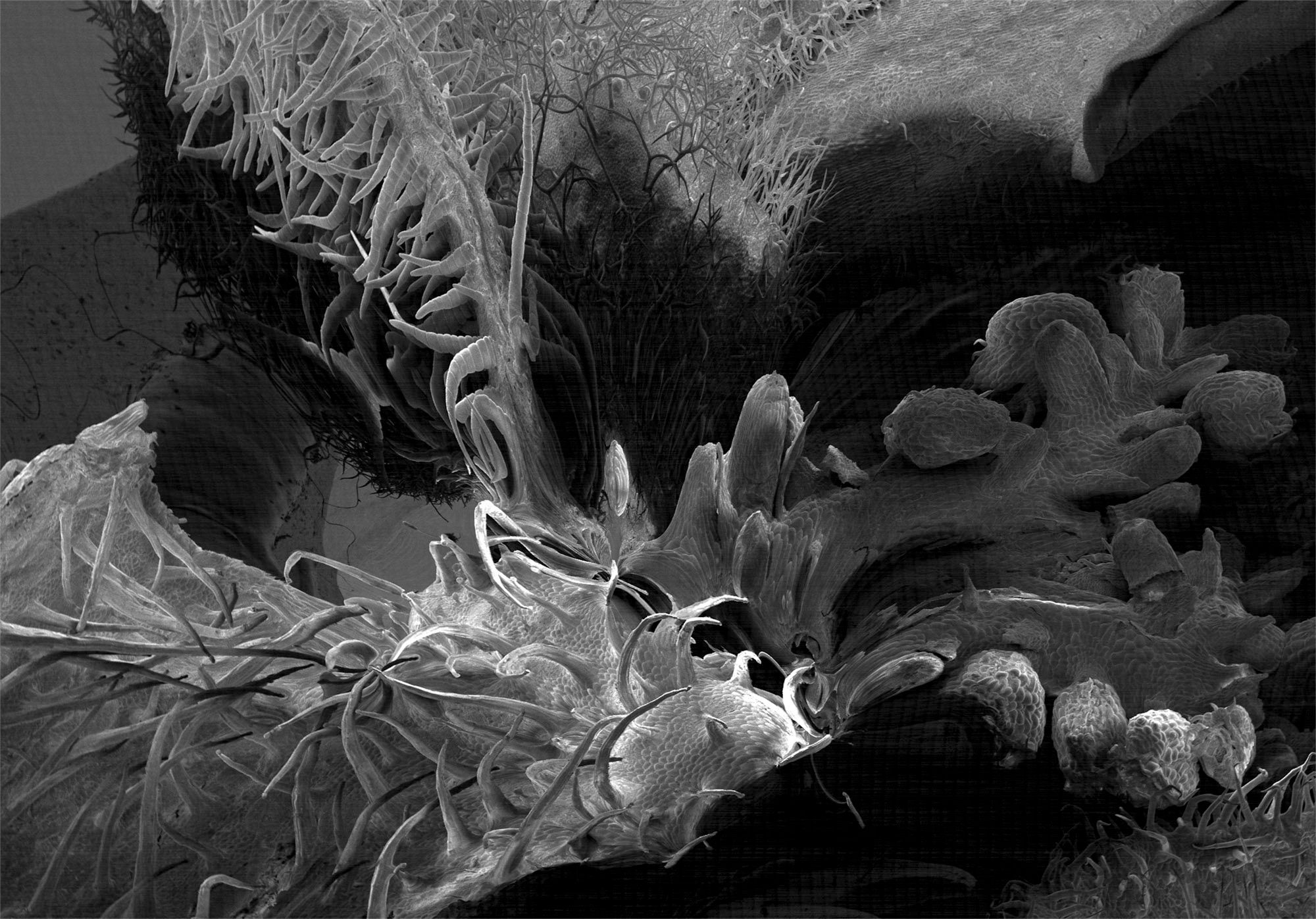
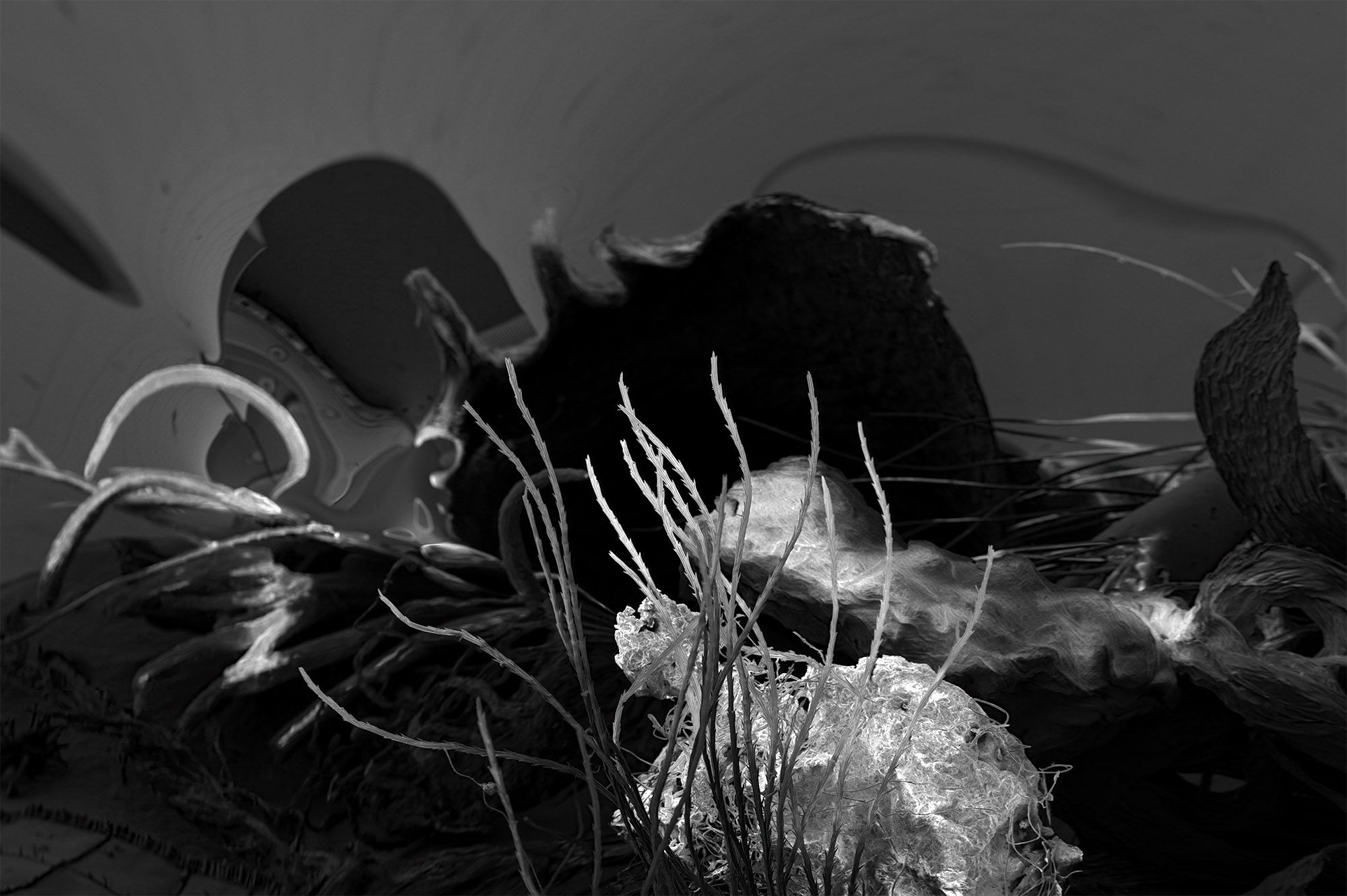
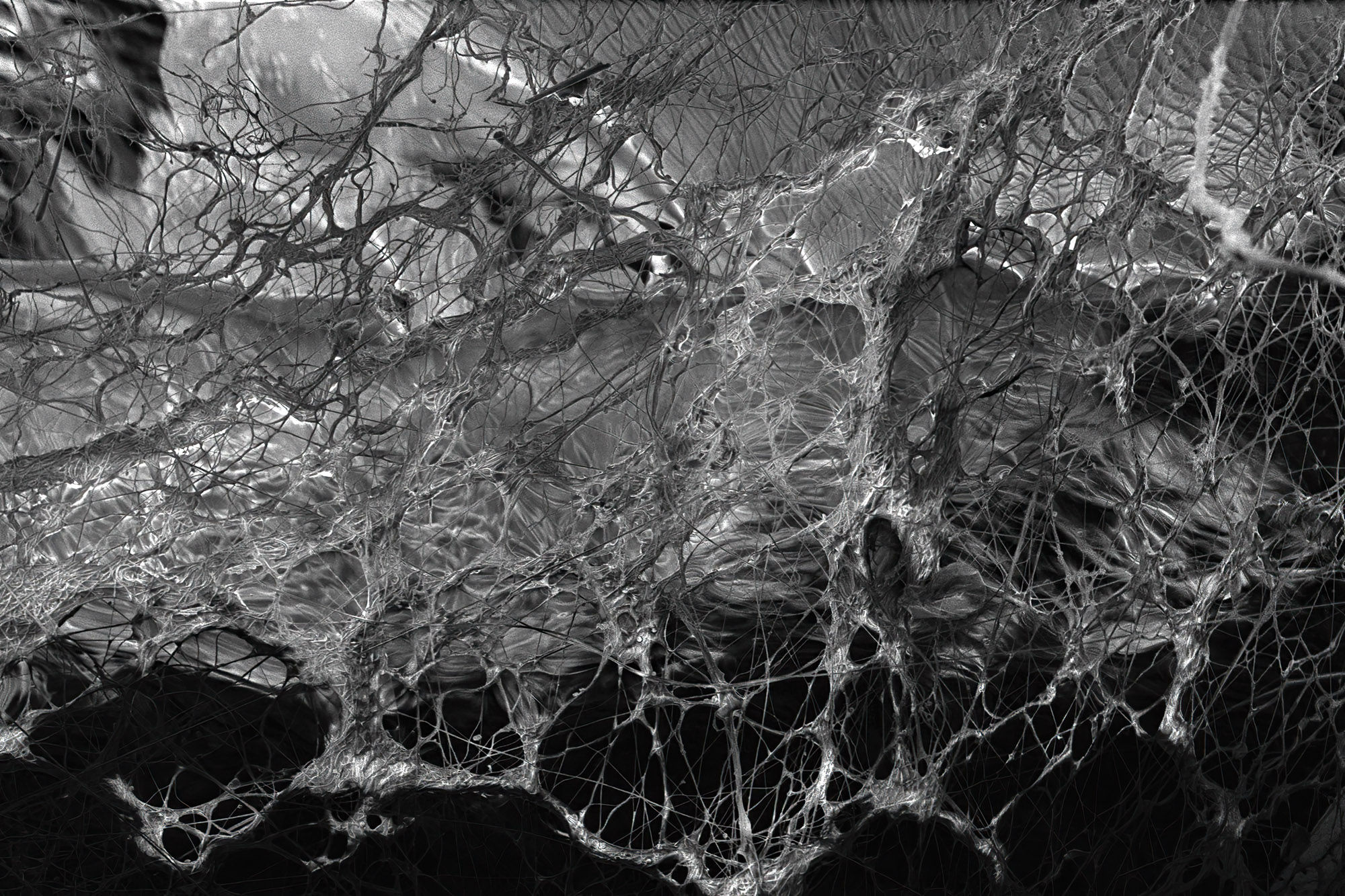
Using scanning electron microscopy, I create microscopic landscapes from insect and plant fragments, exploring surfaces shaped by both biological structure and the imaging process itself. Rather than treating charging artifacts and distortions as errors to eliminate, this work embraces the ways accumulated electrons can warp, stretch, and destabilize forms, producing strange terrains suspended between scientific imaging and abstraction.
Microscope: Hitachi S4700 and Tescan ChemiSEM
Specimens include insect fragments, plant material, and found organic debris imaged using scanning electron microscopy (SEM). The microscope stage is tilted to exaggerate depth and transform microscopic surfaces into landscape-like terrain. Many samples are intentionally left uncoated or imaged under unstable conditions to encourage charging artifacts, beam drift, and surface distortions. Rather than correcting these effects, the work uses them to warp and destabilize the image, revealing the microscope itself as an active part of the process. Images are collected across varying magnifications and voltages as part of an ongoing experimental archive.